
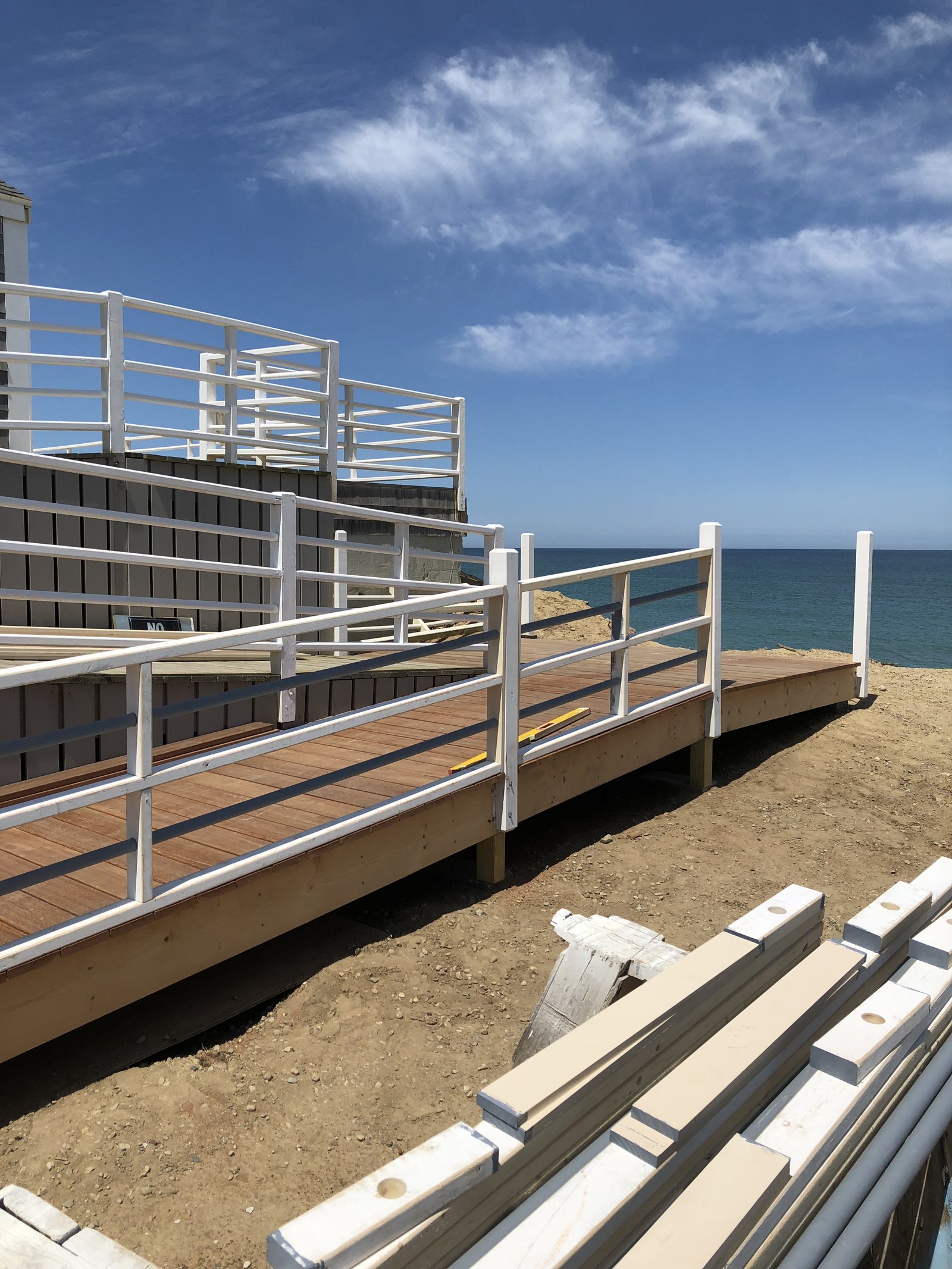
Your deck is where summer memories are made — barbecues with friends, morning coffee in the fresh air, watching the sunset. But decks don't last forever, and a failing deck isn't just an eyesore — it's a safety hazard. Having built and repaired decks for 25 years, I know the warning signs most homeowners miss.
Here are five warning signs that your deck needs professional attention before this summer's entertaining begins.
1. Soft or Spongy Boards
Walk across your deck and pay attention to how the boards feel underfoot. If any sections feel soft, spongy, or bouncy, you likely have rot beneath the surface. The salt air and humidity on Nantucket can accelerate wood deterioration, especially if the deck hasn't been properly maintained.
What to do: Probe suspicious areas with a screwdriver. If it sinks in easily, you have rot. Some boards can be replaced individually, but widespread softness usually indicates it's time for a new deck.
2. Loose or Corroded Fasteners
Inspect the nails, screws, and bolts holding your deck together. Are they:
- Rusted or corroded?
- Loose or backing out?
- Missing entirely?
Coastal salt air is particularly hard on metal fasteners. Even galvanized hardware eventually succumbs. Loose fasteners don't just affect appearance—they compromise structural integrity.
3. Cracked Splitting or Warping
While some minor cracking is normal as wood ages, significant splitting indicates the lumber is reaching end-of-life. Look for:
- Boards with large cracks running the full length
- Warped or cupped boards that hold water
- Visible splintering that could injure bare feet
Warped boards create tripping hazards and trap moisture, accelerating decay.
4. Railing Issues
Deck railings are critical safety features. Test yours by pushing firmly on posts and the railing itself. There should be no movement. Also check for:
- Rot at the base of posts
- Loose balusters or spindles
- Corroded brackets and connectors
A loose railing is dangerous, especially with children or during parties when guests may lean against it.
5. Age and Maintenance History
Even quality cedar decks in ideal conditions last 15-20 years. If your deck is approaching or exceeding that age, start planning for replacement regardless of visible condition. Nantucket's coastal climate—salt air, intense sun, wind, and storms—can shorten that lifespan significantly.
Consider as well how the deck has been maintained. Regular sealing and cleaning extends life; years of neglect accelerates deterioration.
Repair vs. Replace: Making the Decision
Sometimes repairs make sense; sometimes replacement is the smarter investment. Generally:
- Repair: Isolated damage, sound underlying structure, relatively young deck
- Replace: Widespread issues, rotted framing, 20+ years old, outdated design
At Smith & Company, I provide honest assessments. If repairs will safely extend your deck's life for several more years, I'll tell you. If replacement is the better long-term value, I'll explain why.
Planning Ahead
If you're considering deck replacement, spring is the ideal time to start planning on Nantucket. Quality contractors book up quickly, and permits may be required. Starting now means your new deck will be ready for Memorial Day weekend.
Contact me at (207) 740-7966 to schedule a deck inspection. I'll give you an honest assessment and, if needed, design a beautiful new outdoor space for your summer enjoyment.
Tags: Deck Building, Construction, Safety